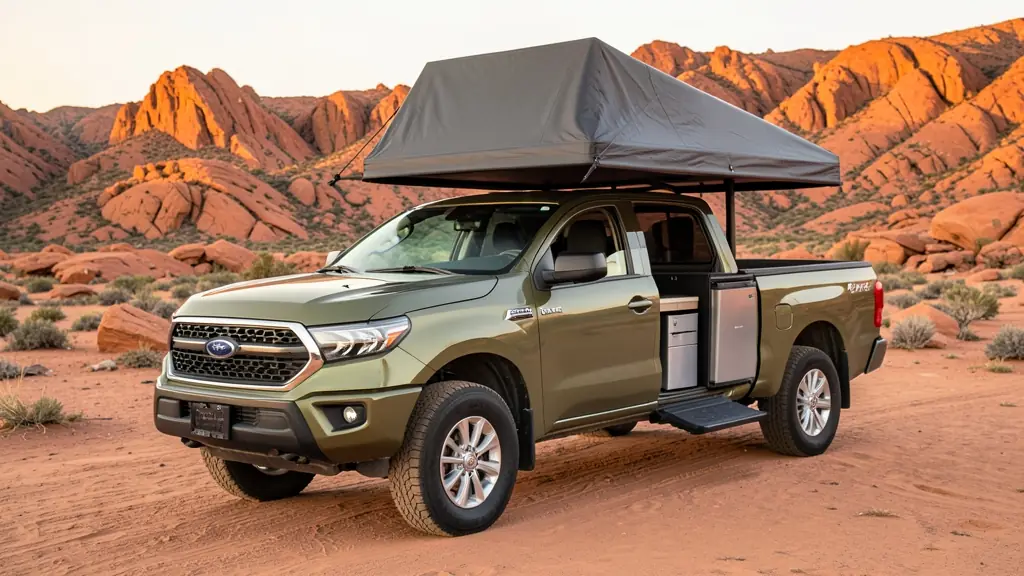
A camping canopy turns a bakkie into a small expedition vehicle: kitchen in a side door, fridge on a slide, water on board and a tent on the roof. Buying the kit is the easy bit. Fitting it inside a payload and a roof rating, and keeping fine dust off it through a week of gravel to Kgalagadi or Mana Pools, takes planning. Plan the build in this order.
Price guide
A Germiston maker lists an aluminium canopy with a cargo slide at about R43,980 for a double cab with factory fitment, and a combo with rack and table at about R63,000, incl. VAT. An online shop lists a touring canopy at about R40,800.
A rough guide from published South African prices. The vehicle, the size, the finish, fitment and VAT all move it.
Start with the weight budget
Write down the payload from the licence disc, then subtract the canopy, the rack, the drawers, the fridge, water, fuel, recovery gear and passengers' luggage. Water weighs about a kilogram a litre, so tanks fill the budget fast. Run your list through the canopy payload calculator before you commit to anything. Heavy items (water, fridge, spares) go low and forward over the axle, and every item gets tied down.
Kitchen, fridge and water: what goes where?
- Side door kitchen: a drawer or fold-down bench behind a lift-up side door, at standing height, so you cook out of the wind.
- Fridge slide: brings the fridge out of the canopy so you are not climbing in. It needs a solid floor mount and a fused 12 V supply wired by a competent auto electrician.
- Water tank: low in the bin or under the drawers, with a tap you can reach from outside.
More on lighting and power is on canopy accessories.
Can the canopy carry a rooftop tent?
Only if the maker says so. A canopy roof has a dynamic rating for driving and a separate static rating for when it is parked with people asleep on it. Ask the maker for both in writing, and check the tent, rack and sleepers with the roof load checker. A side awning on the rack is usually light, but its mounting brackets must go into the reinforced roof frame. Canopy roof racks covers the options.
Keeping dust out on gravel
Dust gets sucked in at the back on dirt roads. A touring build needs good seals at every door, a sealed joint where the canopy meets the bin, and ideally a small vent that pushes clean air in so the inside sits at slightly higher pressure. Test it on a local dirt road before the long trip, with a white towel laid on the floor: whatever turns it brown shows you where the gaps are.
Who asks for this
- Everyday bakkie owners
- A family turning the weekend double cab into a camper for the December holidays.
- Tradesmen
- A contractor who works in town all week and camps at the coast on long weekends.
- Farmers and smallholders
- A farmer setting up a canopy for hunting trips and nights out at the far camp.
- Overlanders and campers
- An overlander planning a month through Namibia and Botswana on gravel and sand.
- Fleets and couriers
- A 4x4 rental fleet fitting identical touring canopies to bakkies hired to tourists.
- Homeowners
- A homeowner's spare bakkie set up for fishing trips up the West Coast.
- Shops, offices and schools
- A tour operator's support bakkie carrying the kitchen and water for guided trips.
- Estates and body corporates
- A game reserve's ranger bakkie kitted out for long nights in the bush.
Frequently asked questions
Is a 4x4 canopy different from a normal one?
It is usually stiffer, better sealed and built to carry a rack and a side door kitchen. The bin fit rules are the same as for any canopy: it must be made for your exact make, model and cab.
Can I sleep inside a canopy?
On a long bin with the gear moved out, some people do. Ventilate it well, and never run a gas cooker or heater inside a closed canopy.
Will my insurer cover touring gear?
Ask your insurer, especially about cover across the border. Declare the canopy, fridge, tent and drawers, and keep a list with photos.
Who will quote me for a camping canopy?
Canopy makers and fitment centres that do touring builds in your region. Give them the trip you have in mind and your payload figure; each sends back its own proposal and price. We build and supply nothing ourselves.